THE ELEPHANT TRANSIT HOME
The Elephant Transit home in Udawalawe is Asia’s most successful rehabilitation center for Elephants, I had the opportunity to see these beautiful creatures being looked after by a group of amazing people, usually the Udawalawe national park is the main attraction in the area that everybody is talking about, but if you visit the Elephant transit home I’m sure you will feel emotional, there are over hundreds of elephants who was abandoned, baby elephants without parents, disabled ones due to the war. The ultimate goal of this place is to care for these elephants and release them back to the wild once they are ready. It takes a lot of courage and humanity to be with these creatures 24 /7 and care for them. The people of the transit home just do that, and perfectly.

As you enter the premises, you can see a huge skeleton structure of an elephant, I find this unique because this is the first time, I saw one. This particular structure is of an elephant called “Sandagiriya” who had done a lot of damage to the fields of the farmers in the north, she has been shot many times and you can still see the bullet holes in her bones. By cruel acts of humans, she took the final bullet.

When I saw hundreds of elephants peacefully enjoying some grass near a natural tank, the sky is blue, grass is so green and herds of elephants, wow probably the most beautiful scenery I have ever seen in my life. Made me so proud of my motherland.

I met with one of the caretakers and for my surprise he named each and every elephant, they all have their own names, I asked him how he would recognize them because they all look same to me, he explained that being with them for so long he can easily recognize them and he said many of their names, in fact they do respond when being called. That’ so amazing. Even though the baby elephants have no parents all the elder elephants take responsibility in looking after the babies, when you get closer to a baby elephant they walk towards you to check on what you are going to do, the only difference is they see people every day so they don’t respond aggressively. The Head person of the place Dr. Vijitha Perera, told me not to touch or cuddle with the baby elephants as their responsibility is to introduce the babies to the wild, since they have been looked after by humans for so long they are friendly but that could be a problem when being released to the wild, so he explained the main aspect of the rehabilitation center is to ready these animals for that, currently the only thing they do is feeding them, looking after them when sick.
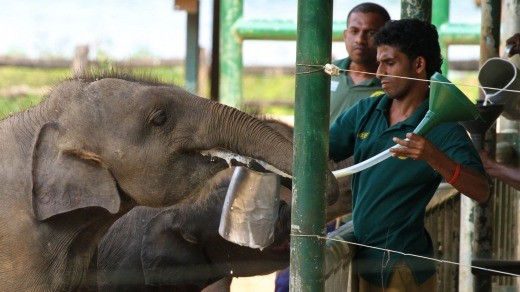
As the feeding time is near, the baby elephants come running towards where the milk being served, no clock, no alarm these small giants naturally know the feeding time. Some of them are bottle fed while for the others they use a tube to pour the milk. In the meantime, there are also cute fellows drinking milk in a bucket, I asked the care taker why, he explained that is how they particularly like to enjoy the milk. There are some who are not ready to leave after drinking one jug, while there are others who politely go back to the que and wait for their second jug, I came across this one disable elephant his name is “Namal” he has lost a leg to a land mine during the war. He is fixed an artificial leg to walk about when needed. There are many elephants who are injured or sick, this is the only place they can call home.

The milk is made mixed with red rice to make it nutritious; the team ensure to maintain the temperature of the milk in order for the babies to feel like they have it from their mothers. It takes 28 packets per elephant per meal, which is currently the biggest challenge for the team as the funds they receive from the visitors are not enough to feed these animals and maintain the place, but somehow, they are managing. The project was started 23 years ago, the team even thought this will not be successful but became the first and the most successful rehabilitation in all of Asia.


Comments